


Why Traditional Hiring Misses Great Talent
Think about the last time you sifted through a stack of resumes. What caught your eye first? For most hiring managers, it’s usually the education section and previous employers—those shiny credentials from recognizable institutions.
However, here’s the uncomfortable truth: a Harvard degree or experience at a Fortune 500 company doesn’t always translate to better performance. In fact, research consistently shows that academic achievements are surprisingly poor predictors of on-the-job success.
At Gervino Group, we’ve witnessed countless scenarios where candidates with “less impressive” resumes outperformed those with prestigious credentials. Why? Because when it comes to actual job performance, what someone can do matters infinitely more than where they learned to do it.
Moving Beyond the Paper Chase
Traditional resume screening creates several blind spots:
- Overlooking self-taught expertise: Some of the most innovative professionals developed their skills through personal projects, online learning, and real-world application, not formal education.
- Missing career changers: People who pivot industries often bring valuable cross-functional perspectives and transferable skills that paper credentials don’t capture.
- Reinforcing systemic inequalities: Relying heavily on degrees perpetuates advantages for those with access to expensive education, regardless of actual ability.
Skills That Matter But Don’t Show Up on Resumes
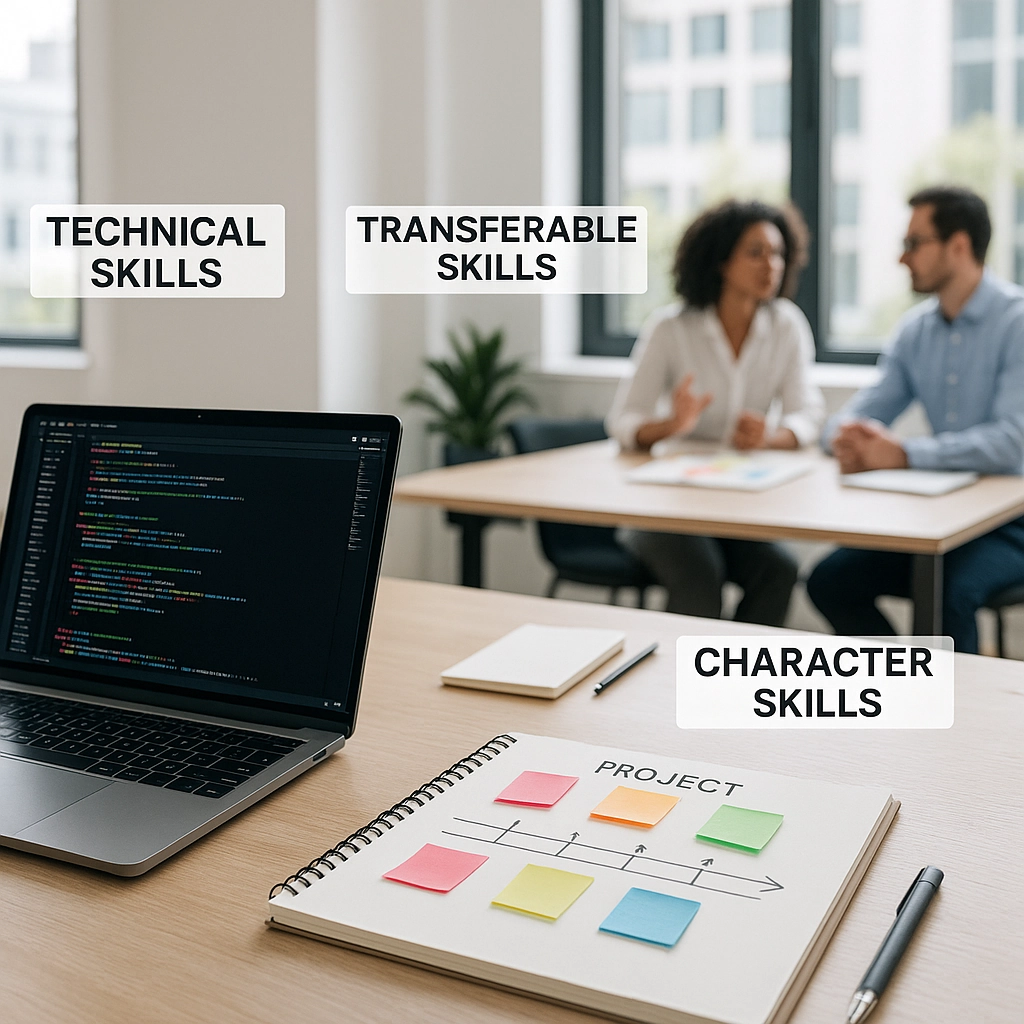
Before diving into assessment methods, let’s clarify what we mean by “skills.” They fall into three essential categories:
1. Technical Capabilities
2. Transferable Skills
3. Character Skills (Often Mislabeled as “Soft Skills”)
Common Mistakes to Avoid
Even organizations committed to skills-based hiring can fall into these traps:
1. Creating Artificial Challenges
Skills assessments should reflect actual job responsibilities. Theoretical puzzles or obscure technical questions often measure test-taking ability, not job performance.
2. One-Dimensional Assessment
Relying solely on technical tests misses crucial dimensions like collaboration and adaptability. Always use multiple assessment methods.
3. Overlooking Potential
Skills-based hiring doesn’t mean candidates must have 100% of requirements today. Look for learning velocity—how quickly someone acquires new capabilities.
4. Forgetting Context
Skills don’t exist in a vacuum. Consider how a candidate’s abilities match your specific:
- Team dynamics
- Work environment
- Customer needs
- Growth trajectory
Building a Skills-First Culture
Implementing skills-based hiring requires broader organizational commitment:
1. Rewrite Job Descriptions
2. Train Interviewers
3. Create Skills Frameworks
4. Measure What Matters

Real Results from Skills-Based Hiring
Organizations embracing skills-first approaches consistently report:
- Wider talent pools: By removing unnecessary degree requirements, companies see 50-70% more qualified applicants
- Increased diversity: Skills-based hiring naturally creates more diverse teams by focusing on capabilities rather than credentials
- Better performance: Studies show skills-assessed hires outperform credential-based hires by 20-25% on key performance indicators
- Higher retention: When people are hired for what they can do (rather than what they’ve done), job satisfaction and longevity improve
The Gervino Approach
At Gervino Group, we’ve refined our skills assessment approach through years of placing exceptional talent across industries. We believe identifying true capability requires both science and art—structured evaluation methods combined with nuanced human judgment.
Our process helps clients look beyond the obvious credentials to discover candidates with the exact skills needed for their unique challenges, whether they come packaged in traditional or non-traditional backgrounds.